15 Weeks Pregnant
At 15 weeks pregnant your baby is about the size of an apple — roughly 101 mm from crown to rump and around 70 grams — and the lungs are practicing breathing movements. The ears have settled onto the sides of the head, your baby can squint, frown, and hiccup, and your appetite is likely roaring back.
Your week at a glance
| This week | Details |
|---|---|
| Baby size | About an apple, roughly 101 mm crown to rump, around 70 g |
| What is developing | Practice breathing, ears on sides of head, eyes moving forward, hiccups, hair |
| Your symptoms | Roaring hunger, round ligament twinges, nasal congestion, nosebleeds, more discharge |
| To-do | Lift with your knees, get steady vitamin D, switch into clothes that fit |
How big is your baby at 15 weeks?
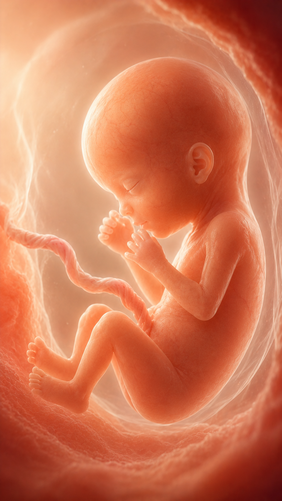
Your baby is about the size of an apple this week, roughly 101 millimeters from crown to rump and weighing around 70 grams. The internal architecture is reshuffling into place: the ears, which started low on the neck, have moved into their final position on the sides of the head, and the eyes have shifted closer to the front of the face from their earlier wide-set spot. The intestines have fully tucked into the abdomen, the diaphragm is well formed, and the legs are starting to outgrow the arms — a switch from earlier weeks when arms led the way.
Your baby's lungs are getting daily practice now, inhaling and exhaling small amounts of amniotic fluid in rehearsal breathing movements that strengthen the diaphragm and help the lungs develop, even though they will not breathe air until birth. The face is doing its own rehearsals — your baby can squint, frown, grimace, and smile, and spends a lot of time sucking their thumb. Sometimes the diaphragm gets so busy practicing that they get hiccups, which can later show up as a steady rhythmic bumping when you can feel them. Hair is also starting to come in, both on the scalp and as a delicate pattern of eyebrows.
15 weeks pregnant symptoms
If first-trimester nausea took your appetite hostage, week 15 is often when it comes roaring back — sometimes ravenously so. These are the common symptoms this week:
- A genuine, sometimes ravenous hunger as your body responds to your baby's accelerating growth — you only need around 340 extra calories a day, so focus on nutrient density over volume
- Round ligament pain — sharp, quick twinges in your lower belly or groin when you cough, sneeze, laugh, stand up fast, or shift positions in bed; short and not dangerous, just startling
- A persistently stuffy nose (pregnancy rhinitis) and mild nosebleeds from rising blood volume — saline spray and a humidifier help more than decongestants, which are not always pregnancy-safe
- Increased vaginal discharge — usually thin and milky white (leukorrhea), a normal way your body protects against infection
- Heartburn, mild constipation, gas, bleeding gums when you brush, and faint dizziness when you stand up too fast
As your shape changes more visibly, body-image feelings can flicker — pride one day, vulnerability the next. Both are normal. If body-image concerns ever feel persistent or distressing, bring them up with your provider; a counselor who specializes in perinatal mental health can make a real difference.
Taking care of yourself this week
Your center of gravity is starting to shift forward as your bump grows, and the hormone relaxin is loosening your ligaments to prepare for delivery, which means your back, hips, and pelvis are more vulnerable to strain. Practice safe lifting from here on: bend at the knees and hips rather than the waist, keep the object close to your body, lift with your legs and not your back, and turn with your feet rather than twisting your spine. Avoid lifting anything heavy if you can hand it off, and let other people help. Gentle daily movement like walking, swimming, prenatal yoga, or low-impact stationary cycling continues to be one of the kindest things you can do for back comfort and energy.
- Vitamin D matters now for calcium absorption and your baby's bone development — aim for around 600 IU a day, usually covered by your prenatal vitamin. Sources include wild-caught salmon and trout, sardines, fortified milk and yogurt, fortified plant milks, and egg yolks.
- Pair iron-rich foods with vitamin C, keep your daily prenatal vitamin going, and stay hydrated.
- Foods to avoid: high-mercury fish, unpasteurized soft cheeses and milk, raw or undercooked meat and eggs, raw sprouts, deli meats unless steamed until hot, and deli-case salads (Listeria risk).
- Clothes that actually fit — loose, breathable maternity tops, stretchy pants with a soft waistband, a supportive maternity bra, and comfortable flat shoes make daily life kinder. You do not need a whole new wardrobe; a few staples and borrowed pieces go a long way.
Treat overheating seriously as your blood volume climbs: lightweight fabrics, layers you can shed, and a water bottle within reach. If anyone offers to do laundry or grocery runs, this is a great week to say yes.
Appointments & tests
Week 15 opens the window for the quad screen, sometimes called the quadruple marker or maternal serum quad. It is a single blood test that measures four substances — alpha-fetoprotein (AFP), human chorionic gonadotropin (hCG), unconjugated estriol, and inhibin A — to give a individual risk estimate for Down syndrome (Trisomy 21), Trisomy 18, and open neural tube defects like spina bifida. It is offered between weeks 15 and 22, with weeks 16 to 18 being the sweet spot. If you have already had NIPT or first-trimester combined screening, your provider may recommend just an AFP-only blood test, since NIPT does not screen for neural tube defects. Ask what they suggest for your history.
If you have a routine visit around now, it will follow the usual second-trimester pattern: blood pressure, weight, a urine dipstick for protein and sugar, and listening to the heartbeat with a handheld Doppler, which usually comes through quickly and clearly by this point. Your provider may discuss the upcoming anatomy scan and help you schedule it for somewhere between 18 and 22 weeks, and review any earlier screening results. Bring written-down questions: "Given the screenings I have already had, which additional tests do you recommend?" "When should I schedule the anatomy scan?" "What does it mean if my quad screen comes back as high-risk?"
Call your provider if
- A fever above 100.4°F, with or without other symptoms
- Severe lower abdominal pain, especially if it does not ease with rest
- Any fluid leaking from the vagina, particularly if it is clear and steady
- Vaginal bleeding heavier than spotting, especially bright red — soaking a large pad in an hour or less means head in or call 911
- Burning, urgency, or pain with urination, or pink-tinged urine (possible UTI)
- A severe headache that does not ease with rest, sudden visual changes, persistent vomiting for 24 hours, or severe, localized pain, warmth, or swelling in one calf or leg
Reflects Mayo Clinic and Cleveland Clinic second-trimester fetal-development references and MedlinePlus pregnancy guidance, 2024–2026.
Related questions
- How big is the baby at 15 weeks pregnant?
- About the size of an apple — roughly 101 millimeters from crown to rump and weighing around 70 grams. The ears have moved into their final position on the sides of the head, the eyes have shifted toward the front of the face, and the legs are starting to outgrow the arms.
- Why am I so hungry at 15 weeks pregnant?
- If first-trimester nausea took your appetite hostage, week 15 is often when it comes roaring back as your body responds to your baby's accelerating growth. You only need around 340 extra calories a day in the second trimester, so this is more about nutrient density than huge volume.
- What is round ligament pain at 15 weeks?
- The ligaments that support your uterus on either side have to stretch as it grows, and they often respond with sharp, quick twinges in your lower belly or groin when you cough, sneeze, laugh, stand up fast, or shift positions in bed. The pain is short and not dangerous, just startling.
- When is the quad screen done?
- Week 15 opens the window for the quad screen, a single blood test measuring AFP, hCG, estriol, and inhibin A to estimate the risk of Down syndrome, Trisomy 18, and open neural tube defects. It is offered between weeks 15 and 22, with weeks 16 to 18 being the sweet spot.
Sources & further reading
ParentFlow: one free app, pregnancy to age six
ParentFlow follows your pregnancy week by week — baby size, what's developing, your symptoms, and the appointments and warning signs that matter — then becomes a free baby tracker for feeds, sleep, and growth after birth. Free on iPhone and Android.
App Store Google Play Open Web AppThis article reflects current ACOG, Mayo Clinic, Cleveland Clinic, CDC, and FDA guidance and is for educational purposes only. It does not constitute medical advice. ParentFlow is a wellness companion — not a substitute for your obstetric provider. For any medical concern, contact your healthcare provider.