14 Weeks Pregnant
At 14 weeks pregnant your baby is about the size of a lemon — roughly 87 mm from crown to rump and around 43 grams — and the second trimester begins. A soft fuzz called lanugo is starting to grow, fingerprints are forming, and for many people this is the week energy returns and nausea finally starts to fade.
Your week at a glance
| This week | Details |
|---|---|
| Baby size | About a lemon, roughly 87 mm crown to rump, around 43 g |
| What is developing | Lanugo fuzz, fingerprints, sealing hard palate, coordinated movement, facial expressions |
| Your symptoms | Returning energy, fading nausea, small bump, fewer bathroom trips, bleeding gums |
| To-do | Settle into side-sleeping, keep protein steady, plan the anatomy scan |
How big is your baby at 14 weeks?
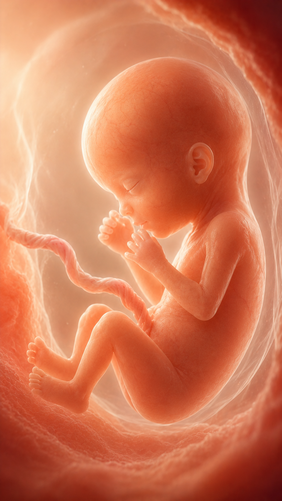
Your baby is about the size of a lemon this week, roughly 87 millimeters from crown to rump and weighing somewhere around 43 grams. The skin is still thin and translucent but is starting to thicken, and a soft, fine fuzz called lanugo is beginning to grow all over the body. Lanugo helps regulate temperature now and will keep that vernix coating in place later; most babies shed most of it before birth. Tiny unique fingerprints are forming, and the roof of the mouth — the hard palate — is sealing up, a meaningful milestone for swallowing and feeding later.
Movement is becoming more coordinated and more fun. Your baby can bring their hands up to their face, suck their thumb, turn their head, squint, frown, grimace, and probably even smile in a reflexive way, as facial muscles get their first real workouts. The arms are now in better proportion to the body, the kidneys are producing more urine into the amniotic fluid, and the liver and spleen are busy making red blood cells. External genitals are fully formed, though it can still be hard to tell on ultrasound this exact week — many parents wait for the anatomy scan at 18 to 22 weeks for a more reliable view.
14 weeks pregnant symptoms
Week 14 is when many people feel themselves coming back. The hormone hCG has come down from its first-trimester peak, and the second trimester is often the most comfortable stretch of pregnancy. These are the common symptoms this week:
- Easing nausea and food aversions with a returning appetite — though it is fine if yours hangs around a little longer
- A real surge of physical energy that can show up almost overnight
- Fewer bathroom trips as the uterus lifts up out of your pelvis and off your bladder
- A small but distinct bump beginning to show, especially if this is not your first pregnancy
- A skin glow, thicker hair, and faster-growing nails from blood volume up 30 to 50 percent; some breakouts or melasma can also appear
- Round ligament twinges, stuffy nose, mild dizziness, and thin milky discharge
- Bleeding gums when you brush — that is pregnancy gingivitis, and a good reminder to keep up flossing and a dental cleaning if you are due
The return of physical energy can lift mood, but the emotional side is not linear. If you find yourself feeling persistently low, anxious, or unable to enjoy things you usually love, mention it at your next visit. Mental health screening is a standard part of US prenatal care.
Taking care of yourself this week
If your energy is coming back, this is a good week to settle into a sustainable movement routine. ACOG and the CDC recommend about 150 minutes of moderate-intensity activity per week during a healthy pregnancy — brisk walking, prenatal yoga, swimming, water aerobics, or low-impact stationary cycling all count. The talk test is a good gauge: if you can hold a conversation but could not comfortably sing, you are at about the right intensity. Avoid lying flat on your back for long stretches from here on, skip activities with a real risk of falling or belly contact, and run any new routine past your provider.
- Protein is doing a lot of heavy lifting to support rapid tissue growth — aim for steady high-quality protein at every meal: eggs, Greek yogurt, lean meats, poultry, low-mercury fish (salmon, sardines, trout, shrimp), tofu, lentils, beans, and nuts. Around 70 to 100 grams a day is a rough target.
- Side-sleeping — ideally the left side, but either side is fine — keeps your circulation and uterine blood flow optimized. A body pillow or a pillow between your knees helps. If you wake up on your back, just roll back onto your side.
- Foods to avoid: deli salads from a case (potato, tuna, chicken, egg — a real Listeria risk), unpasteurized soft cheeses and milk, raw or undercooked meat and eggs, raw sprouts, high-mercury fish, and deli meats unless steamed until hot.
- Comfort matters — well-fitting maternity or stretchy clothes, supportive bras, and a flatter, comfortable shoe all help your changing body settle in.
Appointments & tests
The second-trimester rhythm settles in now. For an uncomplicated pregnancy, prenatal visits typically happen about every 4 weeks until around 28 weeks, then every 2 weeks through about 36 weeks, then weekly until you deliver. Each visit follows a familiar pattern: a check of your blood pressure, a weight check, a urine dipstick for protein and sugar, and listening to your baby's heartbeat with a handheld Doppler. Starting around 20 weeks, your provider will also measure your fundal height — the distance in centimeters from your pubic bone to the top of your uterus — as a quick growth check.
A few things are coming up on the calendar. The quad screen is a maternal blood test that measures four substances (AFP, hCG, estriol, and inhibin A) to screen for neural tube defects like spina bifida and for chromosomal conditions. It is typically offered between weeks 15 and 22, with weeks 16 to 18 being the sweet spot; if you already had NIPT or first-trimester combined screening, your provider will discuss whether the quad screen still makes sense. The mid-pregnancy anatomy scan is typically scheduled between 18 and 22 weeks, and this is also when many parents find out the sex if they want to. Helpful questions: "When should I schedule the anatomy scan?" "Should I have the quad screen given the screenings I have already had?" "When should I expect to start feeling movement?"
Call your provider if
- Severe, localized pain, warmth, redness, or swelling in one calf or leg (this can suggest a deep vein thrombosis)
- Sudden shortness of breath, chest pain, or coughing up blood — go to the ER for these
- Heavy vaginal bleeding heavier than spotting, especially bright red — soaking a large pad in an hour or less means head in or call 911
- Severe abdominal cramping, or one-sided pelvic pain
- A fever above 100.4°F, or burning, urgency, or pain with urination (possible UTI)
- A persistent severe headache, sudden vision changes, persistent vomiting, or a steady leak of clear fluid from the vagina
Reflects Mayo Clinic and Cleveland Clinic second-trimester fetal-development references and MedlinePlus pregnancy guidance, 2024–2026.
Related questions
- How big is the baby at 14 weeks pregnant?
- About the size of a lemon — roughly 87 millimeters from crown to rump and weighing around 43 grams. Tiny fingerprints are forming, facial muscles are practicing expressions, and a soft fuzz called lanugo is starting to grow all over the body.
- Does the second trimester start at 14 weeks?
- Yes, week 14 marks the start of the second trimester for most counts. Many people describe it as exhaling: hCG has come down from its first-trimester peak, nausea and food aversions usually ease, appetite returns, and a real surge of energy can show up almost overnight.
- When will I feel the baby move?
- You almost certainly will not feel movement yet at 14 weeks. Most first-time parents feel quickening — those first flutters — somewhere between weeks 16 and 22, and people who have been pregnant before often feel it a few weeks earlier because they recognize the sensation.
- What is the quad screen and when is it done?
- The quad screen is a maternal blood test measuring four substances — AFP, hCG, estriol, and inhibin A — to screen for neural tube defects like spina bifida and for chromosomal conditions. It is typically offered between weeks 15 and 22, with weeks 16 to 18 being the sweet spot.
Sources & further reading
ParentFlow: one free app, pregnancy to age six
ParentFlow follows your pregnancy week by week — baby size, what's developing, your symptoms, and the appointments and warning signs that matter — then becomes a free baby tracker for feeds, sleep, and growth after birth. Free on iPhone and Android.
App Store Google Play Open Web AppThis article reflects current ACOG, Mayo Clinic, Cleveland Clinic, CDC, and FDA guidance and is for educational purposes only. It does not constitute medical advice. ParentFlow is a wellness companion — not a substitute for your obstetric provider. For any medical concern, contact your healthcare provider.