17 Weeks Pregnant
At 17 weeks pregnant your baby is about the size of a pomegranate — roughly 130 mm from crown to rump and around 140 grams — and is laying down a first soft layer of fat. Movements are getting bolder, the skeleton is hardening, and your body is rearranging itself: backaches, itchy stretching skin, and a shifting center of gravity are common now.
Your week at a glance
| This week | Details |
|---|---|
| Baby size | About a pomegranate, roughly 130 mm crown to rump, around 140 g |
| What is developing | First fat layer, sweat glands, hardening skeleton, bolder movement, hearing online |
| Your symptoms | Backache, itchy stretching skin, shifting balance, heartburn, leg cramps |
| To-do | Keep movement gentle, skip fall-risk activities, invest in a pregnancy pillow |
How big is your baby at 17 weeks?
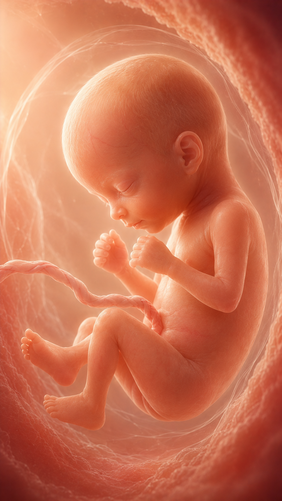
Your baby is about the size of a pomegranate this week, roughly 130 millimeters from crown to rump and weighing somewhere around 140 grams. They are starting to lay down their first thin layer of adipose tissue — the soft fat that will help them regulate body temperature and store energy after birth. Right now they still look quite slender, with thin translucent skin and visible blood vessels underneath, but over the coming weeks that will round out. Sweat glands are forming, and the skeleton, which started as flexible cartilage, is continuing to harden into bone, especially in the long bones of the arms and legs.
Movement is getting bolder and more frequent. Your baby is kicking, stretching, rolling, turning, sucking their thumb, grasping at the umbilical cord, and sometimes startling at sudden loud noises now that their hearing is online. The umbilical cord is getting stronger and thicker to keep up with the increasing demand for oxygen and nutrients, and the placenta has grown into a hardworking organ that supplies food, oxygen, and antibodies while filtering out waste. Your baby's heart is fully functional and beating at around 120 to 160 beats per minute, now regulated by the brainstem rather than being involuntary as in the early weeks.
17 weeks pregnant symptoms
Your bump is unmistakable by now for most people, and your body is doing a quiet rearrangement to accommodate it. These are the common symptoms this week:
- A new backache or pelvic discomfort as your center of gravity shifts forward and relaxin loosens your ligaments and pelvic joints — worse after long stretches of standing, sitting, or one sleep position
- A balance that feels slightly off, especially on stairs or uneven surfaces; tasks like putting on socks or rolling over in bed take a little more thought
- Itchy stretching skin on the abdomen, breasts, hips, and thighs, sometimes with pink or purple stretch marks that fade to silvery lines over time
- Heartburn that gets worse if you lie down too soon after eating, plus mild constipation and gas
- Occasional dizziness, leg cramps at night, and a stuffy nose
The emotional side is real too. As pregnancy becomes more visible, you may notice strangers commenting on your body and advice flying in from every direction. It is okay to set gentle boundaries. If you find yourself feeling persistently low, anxious, or unable to enjoy things you usually love, mention it at your next visit — mental health screening is a standard part of US prenatal care.
Taking care of yourself this week
Keep moving — gentle, low-impact activity continues to be one of the kindest things you can do for back comfort, mood, sleep, blood sugar, and labor preparation. Walking, prenatal yoga, swimming, water aerobics, and stationary cycling are great choices. As your balance shifts, avoid activities with a real risk of falling or hard belly contact: downhill skiing, horseback riding, ice skating, contact sports, and outdoor cycling on busy roads can wait until after delivery. Hot yoga and hot tubs are also off the list because of the risk of overheating. If a stretch of exercise leaves you breathless, dizzy, or in pain, stop and check in with your provider.
- A pregnancy pillow — a long body pillow, a wedge under your bump, or one tucked between your knees — makes side-sleeping much more comfortable. Aim for the left side when you can, but either side is fine; what matters most is not lying flat on your back for long stretches.
- Daily moisturizer — lotion, cocoa butter, shea butter, or coconut oil — soothes the itch of stretching skin, even though no product reliably prevents stretch marks (genetics plays the biggest role).
- Food safety stays important against Toxoplasma and Listeria: sanitize cutting boards and counters between raw meat and ready-to-eat foods, wash all raw fruits and vegetables under running water, cook meats thoroughly, and avoid unpasteurized soft cheeses, deli-case salads, raw or undercooked eggs, raw sprouts, and deli meats unless steamed hot. If you have a cat, ask someone else to handle the litter box, or wear gloves and wash your hands carefully.
- Keep up your daily prenatal vitamin, lean into iron-rich foods with vitamin C, and stay hydrated.
Appointments & tests
If you have a routine visit around now, it will follow the familiar second-trimester pattern: blood pressure, weight, a urine dipstick for protein and sugar, and listening to your baby's heartbeat with a handheld Doppler, which usually comes through quickly and clearly by this stage. Your provider will ask how you are feeling, your appetite and sleep, and whether you have noticed any movement yet — do not worry if you have not, since most first-time parents will not for another week or three. They may start tracking fundal height by hand; more formal measurements in centimeters typically begin around 20 weeks once your uterus reaches your belly button.
If you had the quad screen or earlier screenings, results may be arriving around now. Take a breath before opening anything: screenings give a individual risk estimate, not a diagnosis. A "low risk" result is reassuring but not a guarantee, and a "high risk" or "positive" screen does not mean something is wrong — it means more information might help, often through a diagnostic test like amniocentesis (typically offered between weeks 15 and 20) or a conversation with a genetic counselor. The mid-pregnancy anatomy scan is the next big appointment on the horizon, typically scheduled between weeks 18 and 22 — a detailed ultrasound that checks your baby's organs and structures and confirms growth and amniotic fluid. If yours is not yet on the calendar, this is a good week to book, since popular practices fill up. Helpful questions: "Is my anatomy scan booked, and when is it?" "Can you walk me through my quad screen results?" "When should I expect to feel movement?"
Call your provider if
- Sudden, severe swelling of the face, hands, or ankles, especially with a persistent headache or vision changes (possible early preeclampsia)
- A severe headache that does not ease with rest, hydration, and acetaminophen, or vision changes like blurriness, spots, or flashing lights
- Pain in your upper-right abdomen under the ribs, severe abdominal pain, or persistent cramping
- Vaginal bleeding heavier than spotting, or any fluid leaking from the vagina — soaking a large pad in an hour or less means head in or call 911
- A fever above 100.4°F, or burning, urgency, or pain with urination
- Persistent vomiting, or severe, localized pain, warmth, or swelling in one calf
Reflects Mayo Clinic and Cleveland Clinic second-trimester fetal-development and anatomy-scan references and MedlinePlus pregnancy guidance, 2024–2026.
Related questions
- How big is the baby at 17 weeks pregnant?
- About the size of a pomegranate — roughly 130 millimeters from crown to rump and weighing around 140 grams. Your baby is laying down a first thin layer of fat, sweat glands are forming, and the skeleton is continuing to harden from cartilage into bone.
- What is the anatomy scan and when is it done?
- The mid-pregnancy anatomy scan is a detailed ultrasound, typically scheduled between 18 and 22 weeks, that checks the brain, face, heart, spine, kidneys, stomach, bladder, limbs, hands, feet, and placenta, and confirms growth and amniotic fluid levels. It is also when many parents find out the sex if they want to know.
- Why does my back hurt at 17 weeks pregnant?
- Your center of gravity is shifting forward, the hormone relaxin is loosening your ligaments and pelvic joints in preparation for delivery, and your posture is adjusting. The result is often a new backache or pelvic discomfort that comes and goes, especially after long stretches of standing, sitting, or one sleep position.
- Is itchy skin normal at 17 weeks pregnant?
- Yes. The skin on your abdomen, breasts, hips, and thighs is stretching, and itchy skin is one of the most common complaints around now. Pink or purple stretch marks may also appear; they are normal and fade to silvery lines over time. Gentle daily moisturizer soothes the itch, though it cannot prevent the marks.
Sources & further reading
ParentFlow: one free app, pregnancy to age six
ParentFlow follows your pregnancy week by week — baby size, what's developing, your symptoms, and the appointments and warning signs that matter — then becomes a free baby tracker for feeds, sleep, and growth after birth. Free on iPhone and Android.
App Store Google Play Open Web AppThis article reflects current ACOG, Mayo Clinic, Cleveland Clinic, CDC, and FDA guidance and is for educational purposes only. It does not constitute medical advice. ParentFlow is a wellness companion — not a substitute for your obstetric provider. For any medical concern, contact your healthcare provider.