18 Weeks Pregnant
At 18 weeks pregnant your baby is about the size of a bell pepper — roughly 5.5 inches and around 7 ounces — and is rehearsing reflexes like swallowing, blinking, and yawning. Your bump is showing for real now, the anatomy scan is on the horizon, and you may feel light-headed if you stand up too fast as your blood pressure runs a little lower.
Your week at a glance
| This week | Details |
|---|---|
| Baby size | About a bell pepper, roughly 14.2 cm (5.5 in) and ~190 g (7 oz) |
| What is developing | Reflexes (swallowing, blinking, yawning), grasping hands, hearing, ossifying skeleton |
| Your symptoms | Visible bump, light-headedness on standing, heartburn, round-ligament twinges, linea nigra |
| To-do | Stand up slowly, eat smaller meals, sleep on your side, plan questions for the anatomy scan |
How big is your baby at 18 weeks?
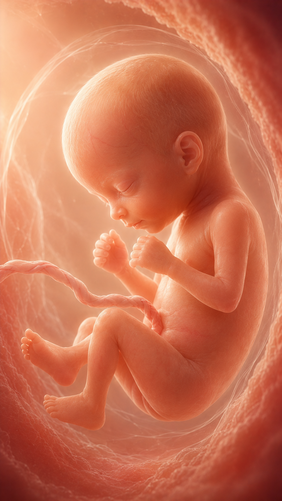
Your baby is about the size of a bell pepper this week, around 5.5 inches from head to bottom and roughly 7 ounces (about 190 grams). Reflexes that will matter a lot after birth are quietly rehearsing right now — swallowing little sips of amniotic fluid, blinking, yawning, and even hiccuping. The tiny hands can curl into a grasp, and your baby may absentmindedly touch their own face or bump into the umbilical cord. Inside the ears, the small bones are hardening and the nerve pathways from ear to brain are connecting, so your baby is starting to pick up muffled sounds from inside your body — your heartbeat, your stomach gurgling, and the steady whoosh of blood through the placenta.
If you are carrying a girl, her uterus and fallopian tubes are forming in place this week; if you are carrying a boy, the genitals are clearly developed and may be visible on ultrasound. The skeleton, which started as soft cartilage, is steadily turning into bone — a process called ossification that continues right up until birth. Most of the major organs are in place; the focus from here is growing, refining, and building reserves. You may not feel kicks yet, especially in a first pregnancy, but many people start to notice gentle flutters somewhere between 18 and 22 weeks — often described as bubbles, popcorn popping, or a goldfish swimming. Movement at this stage is still unpredictable, and not feeling kicks every day is completely normal until a pattern settles, usually closer to weeks 24 to 28.
18 weeks pregnant symptoms
Your bump is most likely a real bump now — visible under fitted clothes and probably impossible to suck in. Your uterus has climbed to around the level of your belly button, and many people find this is the week pregnancy starts to feel publicly real. These are the common, normal symptoms this week:
- Light-headedness when you stand up too fast, because hormones relax your blood vessels and lower your blood pressure
- Heartburn and indigestion as progesterone relaxes the valve between your stomach and esophagus, especially after a big meal or lying down too soon
- A flattening or popping belly button and a faint dark midline down the bump (the linea nigra)
- Round-ligament twinges in the lower belly when you turn over in bed or stand up
- Mild nasal congestion, some pelvic pressure, and a bit more clear or milky vaginal discharge
None of these mean anything is wrong. The anatomy scan looming in the next few weeks can also stir up mixed feelings — it is normal to feel both excited and quietly nervous. If anxiety is making it hard to sleep or enjoy your day, bring it up with your provider; mental-health support is a standard, no-judgment part of prenatal care.
Taking care of yourself this week
A few small habits make this stretch a lot more comfortable. To dodge the dizzy spells, stand up in two stages — sit on the edge of the bed or chair for a few seconds before you fully rise — and avoid lying flat on your back for long periods, which can press on a large vein and lower your blood pressure further. From here on, many providers recommend sleeping mostly on your side; either side is fine, and the old rule about strict left-side sleeping is no longer considered necessary. A pillow between your knees and one behind your back takes real pressure off your lower back and hips.
- Smaller, more frequent meals beat three large ones for heartburn, and leave at least two hours between dinner and lying down.
- Know your reflux triggers — citrus, tomato sauce, fried foods, chocolate, mint, and large amounts of coffee are common culprits.
- Prop your upper body up a few inches at night with extra pillows or a wedge to keep nighttime reflux down.
- Calcium-based antacids (like Tums) are generally considered safe in normal doses, but check with your provider before adding any over-the-counter medication.
- Gentle daily movement — 30 minutes of walking, prenatal yoga, swimming, or stationary cycling, at an intensity where you can talk but not sing.
Keep drinking water steadily through the day — dehydration makes nearly every second-trimester symptom worse. If you can, bring your partner or a support person to the anatomy scan; seeing your baby move on the screen is genuinely moving, and it is nice to share it.
Appointments & tests: the anatomy scan
Somewhere between weeks 18 and 22, your provider will schedule the comprehensive mid-pregnancy anatomy scan — often called the "20-week ultrasound," even though many practices do it slightly earlier or later in that window. This is the most detailed ultrasound of pregnancy. A trained sonographer systematically checks your baby's brain, face, heart (all four chambers and the major vessels), lungs, diaphragm, stomach, kidneys, bladder, spine, arms, legs, hands, and feet, and measures the head, abdomen, and femur to confirm growth is on track. The placenta is checked for position, the umbilical cord for its three vessels, the amniotic fluid for adequate volume, and your cervix for length.
The scan usually takes 30 to 60 minutes. Eat a normal meal beforehand (an active baby is easier to scan), wear something that opens easily over your belly, and be ready for the appointment to take up to an hour. If your baby is curled up so that certain structures cannot be fully seen, do not panic — it is common to be asked back for a brief follow-up rather than a sign something is wrong. If you want to find out the baby's sex, this is the visit where most people learn it; tell your sonographer your preference at the start. Good questions to bring: is the placenta well-positioned, does the cervix length look reassuring, and are the growth measurements in the normal range. If anything needs a closer look, the next step is usually a more detailed scan with a maternal-fetal medicine specialist — not a sign that something is wrong, just a way to get clearer information.
Call your provider if
- A severe or persistent headache that does not ease with rest and water
- Sudden visual changes — blurry or double vision, or seeing spots or flashes of light
- Severe upper-belly pain, especially on the right side just under your ribs (these three together can be early signs of preeclampsia)
- Sudden swelling of your face, hands, or feet, or a fever above 100.4°F
- Any vaginal bleeding heavier than light spotting, a sudden gush of clear fluid, or persistent vomiting where you cannot keep fluids down
Reflects Mayo Clinic and Cleveland Clinic second-trimester fetal-development and anatomy-scan references, 2024–2026.
Related questions
- How big is the baby at 18 weeks pregnant?
- About the size of a bell pepper — roughly 5.5 inches from head to bottom and around 7 ounces (about 190 grams). The tiny hands can curl into a grasp, and your baby is practicing reflexes like swallowing, blinking, yawning, and hiccuping.
- When is the anatomy scan and what does it check?
- The mid-pregnancy anatomy scan is usually done between 18 and 22 weeks. A sonographer systematically checks your baby's brain, face, heart, lungs, stomach, kidneys, bladder, spine, and limbs, measures growth, and looks at the placenta, umbilical cord, amniotic fluid, and your cervix. It usually takes 30 to 60 minutes.
- Why do I feel light-headed at 18 weeks?
- Pregnancy hormones relax the walls of your blood vessels, so your blood pressure runs a little lower than usual now. Standing up too quickly or rolling out of bed can leave you light-headed for a few seconds. Rise in two stages and keep water and a snack close by.
- Can I feel the baby move at 18 weeks?
- Maybe. Many people start to notice gentle flutters between 18 and 22 weeks, often described as bubbles, popcorn popping, or a goldfish swimming. Not feeling kicks yet is completely normal, especially in a first pregnancy; a regular pattern usually settles closer to weeks 24 to 28.
Sources & further reading
ParentFlow: one free app, pregnancy to age six
ParentFlow follows your pregnancy week by week — baby size, what's developing, your symptoms, and the appointments and warning signs that matter — then becomes a free baby tracker for feeds, sleep, and growth after birth. Free on iPhone and Android.
App Store Google Play Open Web AppThis article reflects current ACOG, Mayo Clinic, Cleveland Clinic, CDC, and FDA guidance and is for educational purposes only. It does not constitute medical advice. ParentFlow is a wellness companion — not a substitute for your obstetric provider. For any medical concern, contact your healthcare provider.