3 Weeks Pregnant
At 3 weeks pregnant fertilization happens — a single cell becomes a tiny ball of roughly 100 to 150 cells called a blastocyst, drifting toward your uterus. It is smaller than the dot on this letter i, and it is still far too early for symptoms or a positive test. Most people feel completely normal this week.
Your week at a glance
| This week | Details |
|---|---|
| Baby size | A blastocyst of roughly 100–150 cells, smaller than the dot on an i |
| What is developing | Fertilization, rapid cell division, the inner cells that become the embryo and the outer layer that becomes the placenta |
| Your symptoms | Usually none; possible mild bloating, breast tenderness, or implantation spotting at week's end |
| To-do | Prenatal vitamin with folic acid, no alcohol, review medications, avoid hot tubs and very hot baths |
How big is your baby at 3 weeks?
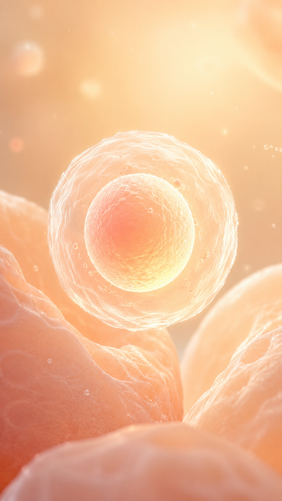
Week three is where it actually begins. Right around the start of this week, ovulation releases a mature egg into the fallopian tube, and if sperm are present, fertilization can happen within hours. The moment a sperm and egg merge, a single new cell forms — called a zygote — carrying a complete set of genetic instructions from both biological parents. Within about 24 hours that cell divides into two, then four, then eight, while the whole tiny bundle is carried down the fallopian tube toward your uterus. By the end of the week, the ball of cells is called a blastocyst and contains roughly 100 to 150 cells.
The blastocyst is astonishingly small but already organized. The inner cluster of cells will become the embryo itself, while the outer layer will form the placenta and supporting tissues. Once it reaches the uterus, it floats free for a day or two before starting to nestle into the prepared uterine lining — a process called implantation that begins toward the very end of this week or the start of week four. Until implantation completes, your body has no way of knowing that anything has happened, which is one reason the early advice to take folic acid and avoid alcohol matters so much: the earliest building blocks are forming right now.
3 weeks pregnant symptoms
Most people feel completely normal in week three, and that is exactly what is expected. There has not yet been enough hCG — the hormone produced after implantation — for any test to detect a pregnancy or for symptoms to begin. You may notice some mild signs of the post-ovulation phase, but these are also normal in any non-pregnant cycle:
- Light breast tenderness and mild bloating as progesterone rises
- A slightly elevated basal body temperature after ovulation
- A touch of fatigue or small changes in appetite
- Implantation bleeding — possible at the very end of the week: a single day of very light pink or brown spotting, too light to fill a panty liner
- A brief, mild implantation cramp in some people
Most people who go on to confirm a pregnancy never notice implantation at all, so its absence does not mean anything is wrong. The two-week wait between ovulation and a possible positive test can be one of the hardest stretches of trying to conceive — limiting how often you check for symptoms and giving yourself something else to focus on both help.
Taking care of yourself this week
Week three is a great week to act as though you might already be pregnant, even if you cannot confirm it yet. The earliest cells of a possible embryo are dividing right now, forming the basic building blocks that will become the brain, spinal cord, heart, and other vital systems. The practical takeaway is simple: keep doing the same gentle, healthy things you would do in any pregnancy. Take a daily prenatal vitamin with at least 400 micrograms of folic acid, eat regular balanced meals, stay hydrated, and sleep when you can.
- Skip alcohol — there is no known safe amount, and the embryo is most sensitive to harmful exposures in the first eight weeks.
- Cut caffeine to under 200 milligrams a day — about one twelve-ounce cup of regular coffee.
- Avoid hot tubs, saunas, and very hot baths — raising your core body temperature in early pregnancy is linked to neural tube problems.
- Review medications — ibuprofen and naproxen are generally fine now but should be avoided once pregnancy is confirmed (acetaminophen is preferred). Never stop a chronic-condition medication suddenly; call your provider first.
- Keep movement low-impact — walking, prenatal-friendly yoga, swimming, gentle strength work; skip high fall-risk and hard-contact activities just in case.
If you smoke or vape, talk with your provider about quitting now; nicotine affects implantation and early development. Partners can help by sharing chores and taking on the cat litter and raw-meat handling, which carry small risks of toxoplasmosis. None of this needs to be perfect — steady, gentle, and kind beats anxious and rigid.
Appointments & planning
There are no routine pregnancy visits in week three. A positive test is still about a week away in most cycles, and providers cannot reliably diagnose or date a pregnancy this early. It is a useful moment for a couple of small administrative pieces. If you have not chosen a prenatal care provider, give it some thought now — your options in the US include an OB-GYN, a family medicine physician who provides prenatal care, a certified nurse midwife, or a maternal-fetal medicine specialist for a high-risk pregnancy.
Check on insurance coverage: which providers are in-network, which hospitals or birth centers your plan covers for delivery, and whether prenatal visits have copays. If you are uninsured, look into your state's Medicaid pregnancy coverage — most states have pregnancy-specific programs that begin immediately upon application, and the federal WIC program provides nutrition support. If you take prescription medications for any chronic condition — depression, anxiety, thyroid issues, blood pressure, diabetes, autoimmune disease, epilepsy, ADHD — call your provider this week to confirm everything is pregnancy-safe. Do not stop any medication on your own; abrupt discontinuation can be more dangerous than carefully weighed continuation.
Call your provider if
- Sharp, one-sided pelvic or lower-belly pain — even if mild — especially if it does not ease with rest
- Persistent cramping noticeably worse than your usual period pain, or bleeding heavier than a normal early period with large clots
- Shoulder-tip pain, especially with belly pain (a possible early sign of ectopic pregnancy)
- Sudden severe dizziness or feeling faint when you stand, or a fever above 100.4°F
- Burning or pain with urination — and call 911 for severe sudden pain that does not ease, fainting, or chest pain
Reflects Mayo Clinic and Cleveland Clinic first-trimester fetal-development references, Cleveland Clinic ectopic-pregnancy guidance, and MedlinePlus, 2024–2026.
Related questions
- What happens at 3 weeks pregnant?
- Fertilization happens this week. A sperm and egg merge into a single cell called a zygote, which divides into two, then four, then eight as it travels down the fallopian tube. By the end of the week it is a blastocyst of roughly 100 to 150 cells, smaller than the dot on this letter i, beginning to nestle into the uterine lining.
- Can you feel anything at 3 weeks pregnant?
- Most people feel completely normal at 3 weeks. There isn't enough hCG yet for a test to detect a pregnancy or for symptoms to begin. You might notice mild breast tenderness, bloating, a slightly higher basal body temperature, or fatigue — but these are also normal in any non-pregnant cycle and aren't reliable signs of conception.
- What is implantation bleeding?
- A small number of people see implantation bleeding at the end of week 3 or in early week 4, when the blastocyst burrows into the uterine lining. It usually looks like a single day of very light pink or brown spotting, not heavy enough to fill a panty liner, sometimes with a brief mild cramp. Most people never notice implantation at all.
- Should I take folic acid at 3 weeks pregnant?
- Yes. Treat yourself as though you might already be pregnant: take a daily prenatal vitamin with at least 400 micrograms of folic acid, skip alcohol, cut caffeine to under 200 mg a day, and avoid hot tubs and very hot baths. The earliest cells are dividing now and are most sensitive to harmful exposures in the first eight weeks.
Sources & further reading
ParentFlow: one free app, pregnancy to age six
ParentFlow follows your pregnancy week by week — baby size, what's developing, your symptoms, and the appointments and warning signs that matter — then becomes a free baby tracker for feeds, sleep, and growth after birth. Free on iPhone and Android.
App Store Google Play Open Web AppThis article reflects current ACOG, Mayo Clinic, Cleveland Clinic, CDC, and FDA guidance and is for educational purposes only. It does not constitute medical advice. ParentFlow is a wellness companion — not a substitute for your obstetric provider. For any medical concern, contact your healthcare provider.