4 Weeks Pregnant
At 4 weeks pregnant, the embryo is implanting in your uterus, your body is starting to make hCG, and a home pregnancy test may finally turn positive. This is the week most people first find out. Symptoms are usually subtle or absent, so a negative test now doesn't rule pregnancy out, retest in a few days.
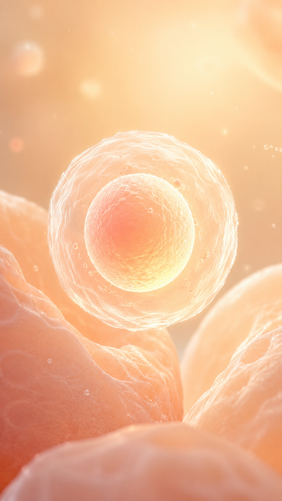
Your baby is the size of a poppy seed and burrowing into your uterine lining. The pregnancy hormone hCG is finally rising.
This week at a glance
| Item | Where things stand at 4 weeks |
|---|---|
| Baby's size | About a poppy seed (~2 mm), a blastocyst becoming an embryo |
| What's developing | Implantation; the amniotic sac and early placenta begin to form |
| Your hormones | hCG begins rising and roughly doubles every ~2 days |
| Common symptoms | Often none; possible spotting, tender breasts, fatigue, mild cramps |
| To-do | Take a test; start (or continue) a prenatal vitamin with 400-800 mcg folic acid |
Where you are at 4 weeks
Pregnancy weeks are counted from the first day of your last period, not from conception, so at 4 weeks you actually conceived only about two weeks ago. Your missed period is right around now, which is why this is the week most people test.
Inside the uterus, the ball of cells (a blastocyst) is burrowing into the uterine lining, a process called implantation. As it attaches, the developing placenta starts releasing human chorionic gonadotropin (hCG), the hormone home tests detect. The embryo is about the size of a poppy seed, and the fluid-filled amniotic sac that will cushion it is taking shape.
Testing and hCG at 4 weeks
A urine test reads positive once hCG is high enough to detect, usually around the time of your missed period. Because hCG roughly doubles every two days early on, a test that's negative today can be positive in 48-72 hours. For the clearest result, test with first-morning urine, when hCG is most concentrated.
A blood test at your provider's office can detect hCG a few days earlier than a urine test and can measure the exact level. Single numbers vary widely between healthy pregnancies, so providers care more about the trend than one reading. Call your provider to set up your first prenatal appointment, which is often scheduled around 8 weeks.
Early symptoms you might notice
Many people feel nothing yet. If symptoms show up, they're usually mild:
- Light spotting (implantation bleeding), lighter and shorter than a period
- Tender, swollen, or tingling breasts
- Fatigue as progesterone climbs
- Mild cramping
- A metallic taste, heightened smell, or early nausea
- Needing to pee more often
What to do this week
- Start a daily prenatal vitamin with 400-800 mcg folic acid to help prevent neural-tube defects (begin before conception when possible).
- Stop alcohol, nicotine, and recreational drugs.
- Limit caffeine to about 200 mg a day (roughly one 12-oz coffee).
- Review any medications and supplements with your provider before stopping or continuing them.
- Call to book your first prenatal visit.
Call your doctor if
- Heavy bleeding (soaking a pad in an hour) or bleeding with clots
- Sharp, severe, or one-sided pelvic pain, which can signal an ectopic pregnancy
- Shoulder-tip pain, dizziness, or fainting
- Fever over 100.4 F (38 C)
- A positive test followed by heavy bleeding and cramping
Reflects Cleveland Clinic fetal-development staging and CDC/USPSTF/ACOG folic-acid guidance, 2024-2026.
Related questions
- Can a pregnancy test be negative at 4 weeks but I'm still pregnant?
- Yes. hCG may not be high enough to detect yet, especially if you ovulated later than expected or test in the afternoon. Wait 2-3 days and retest with first-morning urine, or ask for a blood test, which is more sensitive.
- What should my hCG level be at 4 weeks?
- Levels vary a lot between healthy pregnancies, so there's no single 'right' number. What matters is the pattern: early hCG roughly doubles every 48 hours. Your provider may order two blood draws to confirm it's rising appropriately.
- Is spotting at 4 weeks normal?
- Light spotting around implantation is common and usually harmless. It's lighter and briefer than a period. Call your provider for heavy bleeding, clots, or severe or one-sided pain.
- Do I really need a prenatal vitamin this early?
- Yes. The neural tube forms in the first weeks, often before many people know they're pregnant, so folic acid matters now. Aim for 400-800 mcg daily; your provider may advise more if you've had a prior neural-tube-defect pregnancy.
Sources & further reading
ParentFlow: one free app, newborn to age six
ParentFlow is a free baby tracker that logs feeds, sleep, diapers, pumping and growth in one tap, with your daily summary, trends, and reminders based on your own logs. Free for everyday tracking on iPhone, Android, and the web.
App Store Google Play Open Web AppThis article reflects current AAP, CDC, FDA, and other public-health guidance and is for educational purposes only. It does not constitute medical advice. ParentFlow is a wellness companion — not a substitute for your pediatrician. For any medical concern, contact your healthcare provider.