30 Weeks Pregnant
At 30 weeks pregnant your baby is about the size of a cabbage — roughly 16 inches long and close to 3 pounds — and your fundal height is about 30 centimeters, neatly matching your week. The fine downy lanugo hair is starting to shed as a layer of insulating fat builds underneath, and the brain is forming the deep grooves and folds of a mature brain.
Your week at a glance
| This week | Details |
|---|---|
| Baby size | About a cabbage, roughly 16 inches and ~3 lb (39.9 cm, ~1.32 kg) |
| What is developing | Lanugo shedding, fat building, brain grooving, bone marrow making red blood cells |
| Your symptoms | Returning fatigue, bumpier sleep, heartburn, leg swelling, shortness of breath |
| To-do | Count kicks, build a calm bedtime routine, sign up for a childbirth class |
How big is your baby at 30 weeks?
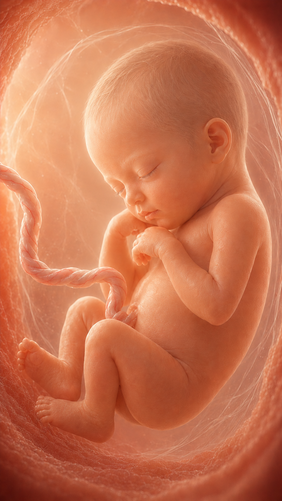
Your baby is now about 16 inches long and close to 3 pounds, roughly the size of a head of cabbage. The fine downy hair called lanugo that has covered your baby for months is starting to shed as a layer of insulating fat builds up underneath, and many babies still have some lanugo at birth. Some babies are growing impressive heads of hair this week while others will arrive nearly bald — both are perfectly normal. The brain is doing some of its most dramatic work yet, developing the deep grooves and folds that let more brain tissue fit inside the skull and forming the networks of connections that support all of your baby's future learning.
A big shift behind the scenes: your baby's bone marrow has now taken over making red blood cells, a job previously handled by the liver and spleen. The immune system continues to gather strength as antibodies cross to your baby through the placenta. The lungs are still maturing — surfactant production is steady — and your baby regularly practices breathing movements by drawing amniotic fluid in and out of their lungs. Vision is improving; the eyes open and close and react to light filtering through your belly.
Movement should still feel strong and frequent, though the kicks and rolls may feel different now — more cramped, with bigger jabs from elbows, heels, and knees as space gets tighter.
30 weeks pregnant symptoms
Your fundal height is about 30 centimeters now, neatly matching your week of pregnancy. Most of what you feel this week comes from carrying more weight and from your uterus crowding nearby organs:
- Returning fatigue — you are carrying more weight, your heart and lungs are working harder, and sleep keeps getting interrupted
- Bumpier sleep from a busy bladder, hip pain, vivid dreams, and a baby who is often active just as you settle in
- Heartburn, which loves this stretch because your stomach is squeezed upward and lying flat makes it worse
- Hip and pelvic joint pain as the hormone relaxin loosens ligaments to prepare for birth
- Swelling in feet and ankles by day's end, and stronger, more frequent Braxton Hicks
- Shortness of breath, mild stretch marks, leg cramps, restless legs, and more colostrum leaking
- A darkening linea nigra down the middle of your belly
Mild, gradual hand or foot swelling is normal; sudden, severe, or one-sided swelling deserves a call. Emotionally, this is often a stretch of mixed feelings — excitement about meeting your baby alongside real impatience, fatigue, and worry about labor. Mood fluctuations are normal, and physical discomfort tends to amplify them.
Taking care of yourself this week
Sleep is genuinely hard at 30 weeks, so a calm wind-down routine pays off. Aim for the same bedtime each night, dim lights about an hour before, put screens away, and try a warm bath, light stretching, or a short meditation. Sleep on your side (left is often most comfortable) with one pillow between your knees and another supporting your belly to take strain off your hips and lower back. A pregnancy pillow or body pillow can replace several smaller ones. For heartburn, eat smaller meals more often, avoid lying down for an hour after eating, prop up the head of your bed, and steer clear of triggers like spicy or greasy foods, citrus, tomatoes, chocolate, mint, and evening caffeine.
- Nutrient-dense snacks work well now — yogurt and berries, whole-grain toast with nut butter, hummus and veggies, hard-boiled eggs, oatmeal, lean meat or beans, and plenty of leafy greens.
- Hydration — about 80 to 100 ounces a day eases leg cramps, Braxton Hicks, and constipation.
- Low-mercury fish like salmon, sardines, and trout are great picks for omega-3 fats; keep avoiding high-mercury fish like swordfish, king mackerel, and tilefish.
- Keep food safety steady — wash produce well, cook meat thoroughly, choose pasteurized dairy, and avoid unpasteurized juices, ciders, soft cheeses, and raw-milk products.
This is a good week for low-energy preparation. If you have not signed up for a childbirth class, hospital tour, or breastfeeding class yet, this is the week — most hospitals offer them, and many doulas and lactation consultants run them too. Start washing newborn clothes, blankets, and crib sheets in a gentle, dye-free, fragrance-free detergent to protect your baby's sensitive skin. Set up the crib or bassinet in your bedroom for room-sharing, and make a folder with your prenatal records, insurance info, hospital paperwork, and pediatrician contact. One small thing per week keeps it from feeling overwhelming.
Appointments & tests
Your routine prenatal visits continue every two weeks. The standard 30-week visit includes a blood pressure check, a urine dip looking for protein (an early sign of preeclampsia) and sugar, a weight check, a fundal-height measurement, and listening to your baby's heartbeat with a Doppler. Your provider will ask about your baby's movement patterns, any swelling (especially sudden or severe swelling of the face or hands), headaches, vision changes, sleep, mood, and contractions. They will also track how your weight gain is progressing and may quietly note your baby's likely position, although most babies are still flipping around at this point.
This is also when your provider starts watching especially closely for early signs of complications: gestational hypertension (high blood pressure that develops during pregnancy), preeclampsia (high blood pressure plus protein in the urine and sometimes other signs), and fetal growth restriction (a baby measuring smaller than expected). If your fundal height measures behind or ahead of schedule, your provider may order a growth ultrasound for a closer look. None of these are reasons to panic on their own — your team is checking proactively so anything that needs attention gets it early. Good questions to bring: how is my blood pressure trending, is my baby measuring on track, what signs of preeclampsia should I watch for, and is now a good time for a hospital tour.
Call your provider if
- A persistent headache that does not ease with rest, water, and acetaminophen, or blurry vision, spots, or flashes
- Sudden or severe swelling of the face or hands, sudden pain under your right ribs, or rapid weight gain of more than 3 to 5 pounds in a week (possible preeclampsia)
- A clear and lasting drop in your baby's movement compared with their usual pattern
- Any vaginal bleeding, or a gush or steady trickle of fluid that could be amniotic fluid
- Regular painful contractions before 37 weeks (especially four or more in an hour), a fever above 100.4°F, or sudden swelling, redness, or pain in one leg
Reflects Mayo Clinic and Cleveland Clinic third-trimester fetal-development references, fundal-height guidance, and fetal-movement (kick count) guidance, 2024–2026.
Related questions
- How big is the baby at 30 weeks pregnant?
- About the size of a head of cabbage — roughly 16 inches long and close to 3 pounds. The fine downy hair called lanugo is starting to shed as an insulating layer of fat builds underneath.
- What is the fundal height at 30 weeks?
- About 30 centimeters, which neatly matches your week of pregnancy. From around 20 weeks on, your fundal height in centimeters usually tracks within a couple of centimeters of your gestational age. If it measures well behind or ahead, your provider may order a growth ultrasound for a closer look.
- Why am I so tired again at 30 weeks?
- The fatigue that often eased in the second trimester is back for many people. You are carrying more weight, your heart and lungs are working harder, and your sleep keeps getting interrupted by a busy bladder, hip pain, vivid dreams, and an active baby. Side-sleeping with pillow support and a calm wind-down routine help.
- What preeclampsia signs should I watch for at 30 weeks?
- Call your provider the same day for a persistent headache that does not ease with rest, water, and acetaminophen, sudden or severe swelling of the face or hands, blurry vision or seeing spots or flashes, sudden severe pain under your right ribs, or rapid weight gain of more than 3 to 5 pounds in a week.
Sources & further reading
ParentFlow: one free app, pregnancy to age six
ParentFlow follows your pregnancy week by week — baby size, what's developing, your symptoms, and the appointments and warning signs that matter — then becomes a free baby tracker for feeds, sleep, and growth after birth. Free on iPhone and Android.
App Store Google Play Open Web AppThis article reflects current ACOG, Mayo Clinic, Cleveland Clinic, CDC, and FDA guidance and is for educational purposes only. It does not constitute medical advice. ParentFlow is a wellness companion — not a substitute for your obstetric provider. For any medical concern, contact your healthcare provider.