8 Weeks Pregnant
At 8 weeks pregnant, the embryo is about the size of a black bean, all major organs are forming, and morning sickness is often climbing toward its peak. This is also the typical window for your first prenatal visit. Symptoms vary widely, feeling little or a lot can both be normal.
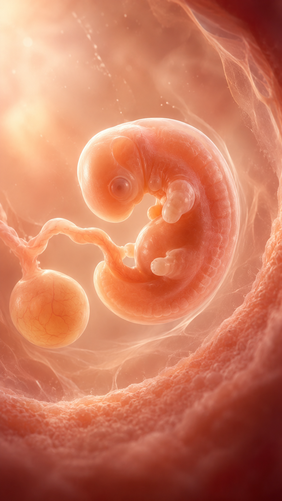
Your baby is the size of a raspberry. Fingers and toes are beginning to separate, and tiny limb movements have started — though you can't feel them yet.
1.6 cm length · ~1 g weight
This week at a glance
| Item | Where things stand at 8 weeks |
|---|---|
| Baby's size | About a black bean (~0.5-1 inch) |
| What's developing | All major organs forming; web-like hands and feet; eyes visible, ears forming |
| Your symptoms | Nausea, fatigue, sore breasts, frequent urination, heightened smell |
| Morning sickness | Often building toward a peak around weeks 8-10 |
| To-do | Attend your first prenatal visit; keep taking your prenatal vitamin |
Baby development at 8 weeks
Week 8 is the end of the embryonic period, a stretch of fast, foundational change. The embryo is roughly half an inch to an inch long, about the size of a black bean, and looks a bit like a tiny tadpole with a large head and a small tail that will soon disappear.
All of the major organs and body systems are now forming. The embryo has web-like hands and feet, the eyes are visible, and the ears are beginning to take shape. The early heart has been beating for a couple of weeks, and at your first ultrasound you may see it flicker on the screen.
Your symptoms this week
Pregnancy hormones are high, and many people feel it most around now. Nausea, with or without vomiting, often builds toward a peak between weeks 8 and 10, tracking with rising hCG. Despite the name, 'morning' sickness can hit at any time of day.
Fatigue is common as your body works to support the pregnancy and placenta. You may also notice tender, fuller breasts, more frequent trips to the bathroom, a sharper sense of smell, food aversions, and mild bloating. Eating small, frequent snacks and staying hydrated can take the edge off nausea.
Your first prenatal visit
The first prenatal appointment is often scheduled around 8 weeks. Expect a thorough review of your medical history, a discussion of any risk factors, blood and urine tests, and a chance to ask questions. Your provider may date the pregnancy with an early ultrasound.
After this visit, first-trimester appointments are usually spaced about every four weeks. Your provider will also talk through optional first-trimester screening, such as cell-free DNA (NIPT) and the nuchal translucency scan, that takes place over the next few weeks.
Ways to feel a little better
Small adjustments often help more than big ones:
- Eat small amounts often; an empty stomach can worsen nausea
- Keep plain crackers by the bed for first thing in the morning
- Sip fluids steadily; cold or fizzy drinks are sometimes easier
- Try ginger or vitamin B6, and ask your provider about anti-nausea options if needed
- Rest when you can, fatigue this trimester is real
Call your doctor if
- You can't keep fluids down or vomit more than three times a day
- Vomit contains blood or looks brown
- Signs of dehydration: little or no urination, dark urine, dizziness, rapid heartbeat
- Heavy vaginal bleeding or severe or one-sided pelvic pain
- Fever over 100.4 F (38 C), or fainting
Reflects Cleveland Clinic fetal-development staging and Mayo Clinic first-trimester prenatal-care guidance, 2024-2026.
Related questions
- Is it normal to have no symptoms at 8 weeks?
- Yes. Symptom intensity varies a lot, and some people feel barely pregnant at 8 weeks. Symptoms can also come and go from day to day. A sudden loss of symptoms with bleeding or cramping is worth a call to your provider, but on its own, feeling fine is common.
- When does morning sickness peak?
- For many people nausea is strongest around weeks 8 to 10, when hCG is near its highest, then eases as the first trimester ends, often around week 13. Some have mild nausea longer; severe, persistent vomiting needs medical attention.
- Will I have an ultrasound at the first prenatal visit?
- Often, yes. An early ultrasound can confirm the pregnancy's location, check for a heartbeat, and date the pregnancy. Whether it's done at the first visit depends on your provider and your history.
- What is the embryo doing at 8 weeks?
- By the end of week 8, all major organs and body systems are forming, the hands and feet are web-like, and the eyes and ears are taking shape. It's about the size of a black bean, roughly half an inch to an inch long.
Sources & further reading
ParentFlow: one free app, newborn to age six
ParentFlow is a free baby tracker that logs feeds, sleep, diapers, pumping and growth in one tap, with your daily summary, trends, and reminders based on your own logs. Free for everyday tracking on iPhone, Android, and the web.
App Store Google Play Open Web AppThis article reflects current AAP, CDC, FDA, and other public-health guidance and is for educational purposes only. It does not constitute medical advice. ParentFlow is a wellness companion — not a substitute for your pediatrician. For any medical concern, contact your healthcare provider.