9 Weeks Pregnant
At 9 weeks pregnant your baby is about the size of a grape — roughly 22 to 30 mm and only about 2 grams — and has officially graduated from embryo to fetus. The small tail is gone, eyelids have formed, and elbows can already bend. For you, hormones are near their peak, so congestion, head rushes, and mood swings often ramp up this week.
Your week at a glance
| This week | Details |
|---|---|
| Baby size | About a grape, roughly 22–30 mm crown to rump, about 2 g |
| What is developing | Tail gone, rounder head, bending elbows, fused eyelids, tooth buds, first movements |
| Your symptoms | Nasal congestion, head rushes, mood swings, peaking nausea, sore breasts, more saliva |
| To-do | Prep questions for your first prenatal visit, ask about NIPT, lean on fiber and fluids |
How big is your baby at 9 weeks?
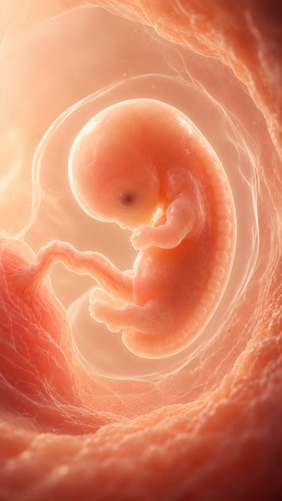
Your baby just crossed a real milestone this week — they have officially graduated from embryo to fetus, and they are about the size of a grape, roughly 22 to 30 millimeters from crown to rump and weighing only about 2 grams. The small tail that has been hanging on for the past few weeks is now completely gone, and the body is starting to look much more proportioned. The head is still very large compared to the rest of them, but it is becoming rounder and more human. Tiny arms have grown enough that elbows can bend, toes are visible at the ends of paddle-shaped feet, and eyelids have formed and gently fused shut to protect the developing eyes.
Underneath the skin, an enormous amount of quiet construction is going on. The diaphragm is forming, the heart already has all four chambers and is beating at around 150 to 170 beats per minute — almost twice as fast as yours — and tiny buds for future baby teeth are already in place under the gums. Your baby is also starting to make small, jerky involuntary movements as the early nervous system fires for the first time, though they are far too small for you to feel anything yet. Internal organs like the liver, pancreas, and kidneys are taking shape and getting ready to do real work in the months ahead.
9 weeks pregnant symptoms
Your body is doing some of its hardest behind-the-scenes work right now. Estrogen and progesterone are climbing fast, blood volume is increasing, and the membranes inside your nose are swelling. These are the common, normal symptoms this week:
- Nasal congestion (pregnancy rhinitis) or mild nosebleeds, and that feeling of a cold that never quite arrives
- Head rushes and dizziness when you stand up too fast, plus occasional headaches
- Strong mood swings — joy, weepiness, irritability, and worry can all show up in the same afternoon
- Peaking nausea and food aversions that often crest somewhere around weeks 8 to 10
- Heavier, more tender breasts and a waistline that is just starting to thicken
- Deep fatigue — growing a placenta is genuinely hard work
- Vivid dreams, mild bloating, more saliva than usual, and a heightened sense of smell
None of this means anything is wrong; it is your body recalibrating to grow a whole new person. The mood swings in particular are your hormones talking, not a sign of how you really feel about your pregnancy, and most of it eases as you head into the second trimester.
Taking care of yourself this week
Nausea is often at its loudest around now, and small adjustments help more than big ones. Try eating something bland — crackers, dry toast, a banana — before you even get out of bed, then graze every two or three hours rather than waiting for a real meal. Cold foods often go down easier than hot ones because they smell less, and ginger tea, ginger chews, or a B6 supplement (with your provider's okay) help many people. Sip water and electrolyte drinks between meals rather than with them, and keep a snack stash in your bag, your car, and on your nightstand.
- Build fiber into every meal — progesterone is slowing your gut, so oats, berries, lentils, beans, pears, leafy greens, whole grains, and nuts make a real difference for constipation.
- Hydrate steadily — aim for around 8 to 10 cups of water a day, paired with fiber and a little gentle movement.
- Wear flat, supportive shoes — your center of gravity is starting to shift and your ligaments are loosening, so wobbly heels are not your friend right now.
- Try gentle pelvic tilts and deep breathing — they ease low-back pressure and take some edge off the mood swings.
- Keep up your daily prenatal vitamin and wash all produce thoroughly under running water to protect against Listeria and Toxoplasma.
The emotional side matters as much as the physical. It is normal to swing between excitement and worry, or to feel disconnected from a pregnancy you cannot yet see or feel. If you find yourself persistently low, anxious, or unable to enjoy things you usually love, mention it at your next visit — mental health is a standard part of prenatal care.
Appointments: your first prenatal visit
Your first full prenatal visit often falls somewhere between weeks 8 and 10, so this week may be the big one. Plan on a longer-than-usual appointment — usually 45 to 60 minutes. Your provider will go through your medical history, family history, any previous pregnancies, and your medications and supplements, then do a physical exam, a blood pressure check, and a baseline weight. A panel of routine bloodwork is standard: blood type and Rh factor, a complete blood count, immunity to rubella and varicella, screening for syphilis, HIV, and hepatitis B, and a urine test. Many practices also offer an early dating ultrasound to confirm your due date.
This is also when your provider will likely bring up genetic screening. Non-Invasive Prenatal Testing (NIPT) is a simple blood draw that screens for Down syndrome (Trisomy 21), Trisomy 18, Trisomy 13, and often sex chromosome conditions, usually from week 10. First-trimester combined screening, which pairs a blood test with a nuchal translucency ultrasound, is another option offered between weeks 10 and 13. These are screenings, not diagnoses — they give a individual risk estimate. Bring a list of every medication and supplement, your last period's start date, and any questions; a support person helps when there is a lot of new information.
Call your provider if
- A severe headache that does not ease with rest, hydration, and acetaminophen, or sudden visual changes like blurriness, spots, or flashing lights
- Fainting or near-fainting
- Bright red bleeding heavier than spotting, especially soaking through a pad, or cramping noticeably worse than period pain
- One-sided pelvic pain — even mild — especially with shoulder pain or dizziness (possible ectopic pregnancy; this needs prompt evaluation)
- Fever above 100.4°F, burning with urination, or persistent vomiting where you cannot keep fluids down for 24 hours
Reflects Mayo Clinic and Cleveland Clinic first-trimester fetal-development references and ACOG nausea-of-pregnancy guidance, 2024–2026.
Related questions
- How big is the baby at 9 weeks pregnant?
- About the size of a grape — roughly 22 to 30 millimeters from crown to rump and weighing only about 2 grams. The embryonic tail is gone, the head is becoming rounder, elbows can bend, toes are visible, and eyelids have formed and fused shut to protect the eyes.
- Is my baby a fetus or an embryo at 9 weeks?
- Week 9 is the milestone week — your baby officially graduates from embryo to fetus. The heart already has all four chambers and beats around 150 to 170 times a minute, tiny tooth buds are in place under the gums, and the first small, jerky involuntary movements begin, though they are far too tiny for you to feel.
- What is NIPT and when can I have it?
- Non-Invasive Prenatal Testing is a simple blood draw that screens for Down syndrome (Trisomy 21), Trisomy 18, Trisomy 13, and often sex chromosome conditions, usually available from week 10. It is a screening, not a diagnosis — it gives a individual risk estimate, not a yes-or-no answer. Coverage varies, so ask your provider's office to check your insurance.
- Why do I feel so moody and congested at 9 weeks?
- Estrogen and progesterone are climbing fast and blood volume is increasing, which swells the membranes inside your nose (pregnancy rhinitis) and can drive head rushes, headaches, and strong mood swings. Nausea and fatigue often peak around weeks 8 to 10. It is your hormones talking, not a sign of how you feel about your pregnancy, and it usually eases in the second trimester.
Sources & further reading
ParentFlow: one free app, pregnancy to age six
ParentFlow follows your pregnancy week by week — baby size, what's developing, your symptoms, and the appointments and warning signs that matter — then becomes a free baby tracker for feeds, sleep, and growth after birth. Free on iPhone and Android.
App Store Google Play Open Web AppThis article reflects current ACOG, Mayo Clinic, Cleveland Clinic, CDC, and FDA guidance and is for educational purposes only. It does not constitute medical advice. ParentFlow is a wellness companion — not a substitute for your obstetric provider. For any medical concern, contact your healthcare provider.